AI in Classroom Assessment: What's Working in 2026
A practical look at how AI is enhancing classroom assessment—from automated feedback to adaptive questioning. What's hype and what actually helps teachers.
Dr. James Liu
EdTech Researcher
AI in education has moved from speculation to reality. But separating genuine innovation from marketing hype requires careful analysis. Here's what's actually working in classroom assessment right now.
The Current State of AI in Assessment
What AI Does Well
Pattern Recognition at Scale
AI excels at identifying patterns across thousands of student responses. This enables:
Automated Feedback on Structured Tasks
For well-defined tasks with clear criteria, AI can provide immediate, consistent feedback:
Adaptive Question Selection
AI can select optimal questions based on demonstrated knowledge:
What AI Doesn't Do Well (Yet)
Nuanced Written Feedback
Despite advances, AI still struggles with:
Understanding Intent
AI often misses:
Emotional Intelligence
AI cannot:
Practical AI Applications Working Today
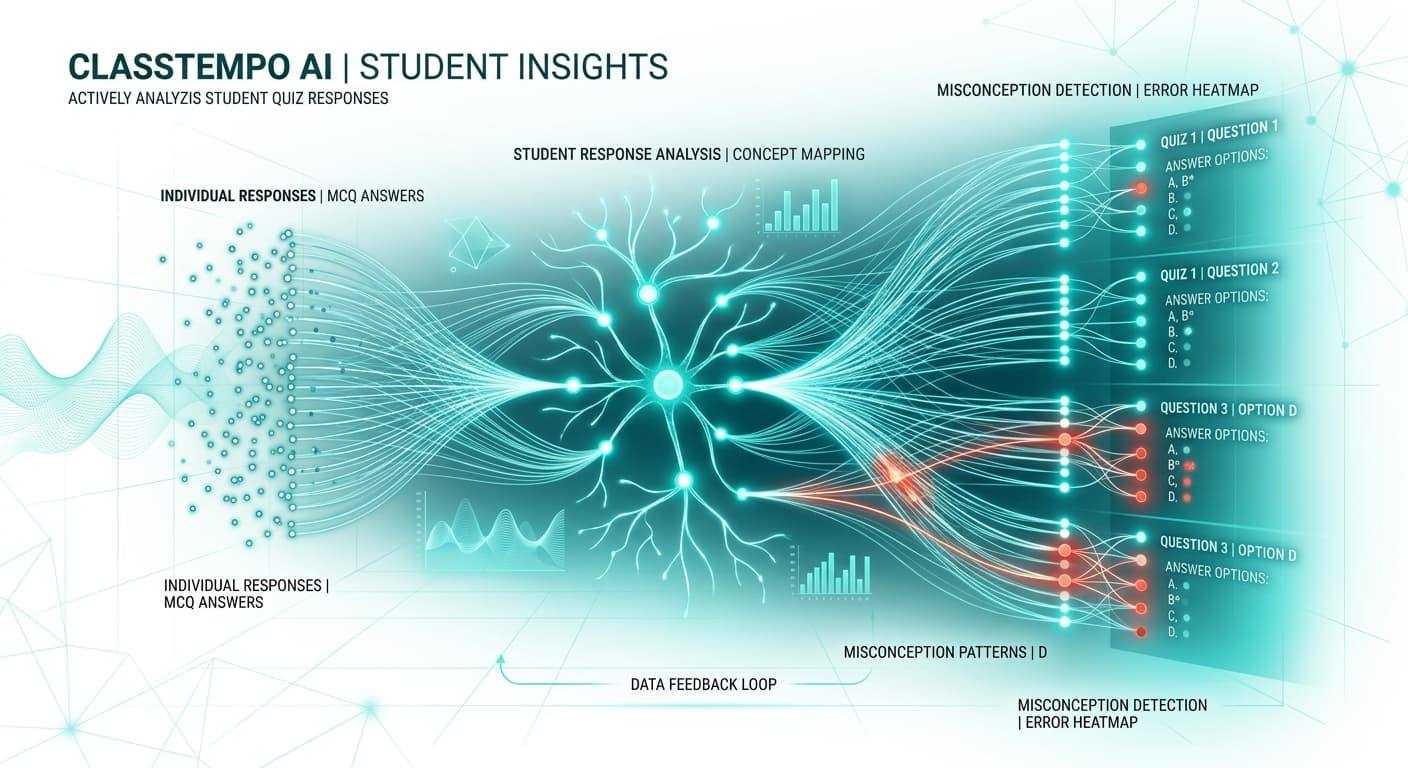
Real-Time Misconception Detection
When students respond to polls and quizzes, AI can analyze response patterns to identify:
Teacher benefit: Immediate alerts when intervention is needed, with suggested talking points based on the specific misconception pattern.
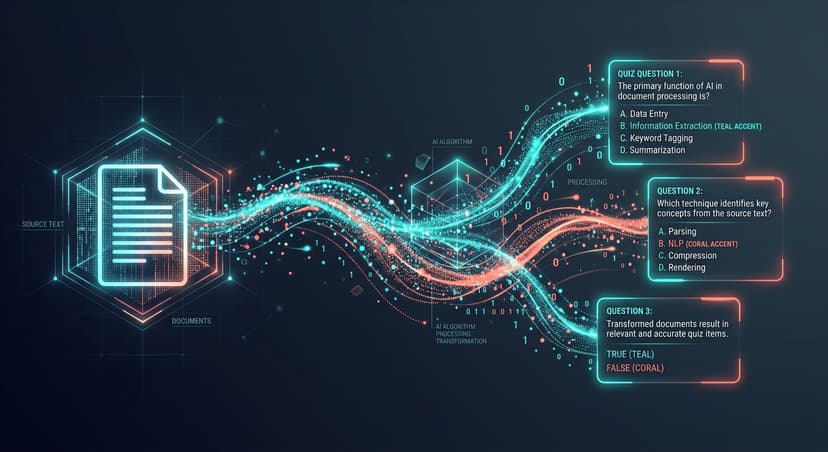
Automated Quiz Generation
AI can generate assessment questions from content:
Teacher benefit: Hours saved on question creation, with human review for quality.
Intelligent Practice Systems
AI-driven practice adapts to each student:
Teacher benefit: Differentiated practice without creating multiple worksheets.
Early Warning Systems
By analyzing participation patterns, response accuracy, and engagement metrics, AI can flag at-risk students:
Teacher benefit: Proactive intervention rather than reactive response.
Implementing AI Assessment Tools
Start with Augmentation, Not Replacement
The most successful implementations use AI to enhance teacher capabilities:
Maintain Transparency
Students and parents should understand:
Keep Humans in the Loop
Never automate decisions without human oversight:
Monitor for Bias
AI systems can perpetuate or amplify biases:
What's Coming Next
Near-Term (1-2 Years)
- Better multi-modal assessment (voice, video, text together)
- More sophisticated writing feedback
- Improved accessibility features
- Tighter LMS integration
Medium-Term (3-5 Years)
- Conversational assessment interfaces
- Predictive learning pathway optimization
- Cross-platform learning analytics
- Standardized AI assessment ethics
Long-Term Questions
- Will AI enable truly personalized assessment at scale?
- How will standardized testing evolve?
- What skills will matter when AI handles routine assessment?
- How do we assess skills that AI can do for us?
Practical Recommendations
For Teachers
1. Experiment with AI-assisted feedback on low-stakes assignments 2. Use AI pattern detection to inform instruction 3. Maintain ownership of final grades and high-stakes decisions 4. Develop AI literacy to evaluate tools critically
For Administrators
1. Pilot AI tools with willing teachers before mandating 2. Invest in professional development 3. Establish clear policies on AI use 4. Budget for ongoing evaluation and adjustment
For Edtech Evaluators
1. Demand evidence of efficacy, not just efficiency 2. Ask about bias testing and mitigation 3. Verify data privacy practices 4. Ensure human override capabilities
The Bottom Line
AI is genuinely useful for classroom assessment—when implemented thoughtfully. The key is using AI for what it does well (pattern recognition, consistency, scale) while preserving human judgment for what it doesn't (nuance, relationships, high-stakes decisions).
The best AI assessment tools make teachers more effective. The worst ones try to replace teacher judgment entirely.
Choose wisely.